Condensation between window panes and drafty frames: what to fix first
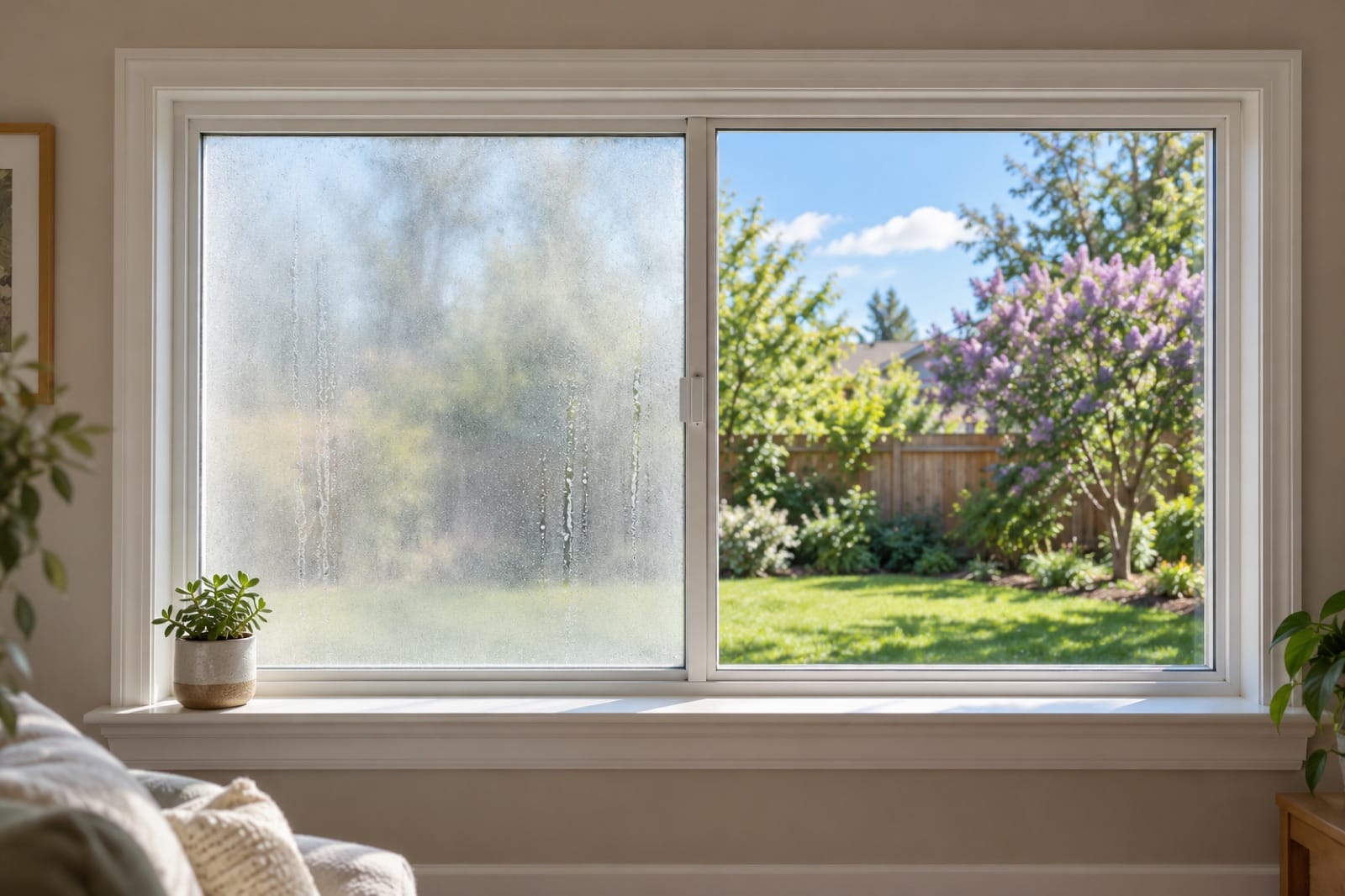
One double-pane window looks permanently misty, and the fog won't wipe off. That's condensation between window panes, and it often comes with other window trouble: the room with the afternoon sun turns into an oven, the mini-split runs flat out and never quite catches up, and on a hot, windy day you can feel warm air coming in around a closed frame.
Some of this is a five-minute fix, some is a new glass unit, and some isn't a problem at all. Here's how to tell which is which, where a thermal camera helps, and the order to fix things in so you spend the least for the biggest difference.
Short answer: Condensation between window panes means the seal around the glass unit has failed and moist air has gotten inside. It won't wipe off from either side and won't clear by itself. It's rarely urgent, so seal drafty frames and shade hot glass first, then replace the sealed glass unit when it suits you.
What causes condensation between window panes?
A double-pane window is a sealed unit: two panes with a dry space between them. Over the years, sun and temperature swings make the unit expand and contract, which can wear out the seal around its edge. Moist air then gets in and fogs the glass from within.
First, find out where the fog really is. It's free and takes two minutes. A double-pane window has three surfaces where water can show up, and each one means something different. Wipe the glass with a dry cloth on the inside, then on the outside.
| Where the fog is | What it means | What to do |
|---|---|---|
| Room side: wipes off inside | Humid indoor air on cooler glass: bathrooms, kitchens, cool mornings | Ventilate and run exhaust fans |
| Outside: wipes off outside | Normal on humid mornings, or when the AC keeps the glass cooler than the air outside | Nothing |
| Between the panes: won't wipe off either side | The seal around the glass unit has failed and moist air has gotten in | Replace the glass unit (see below) |
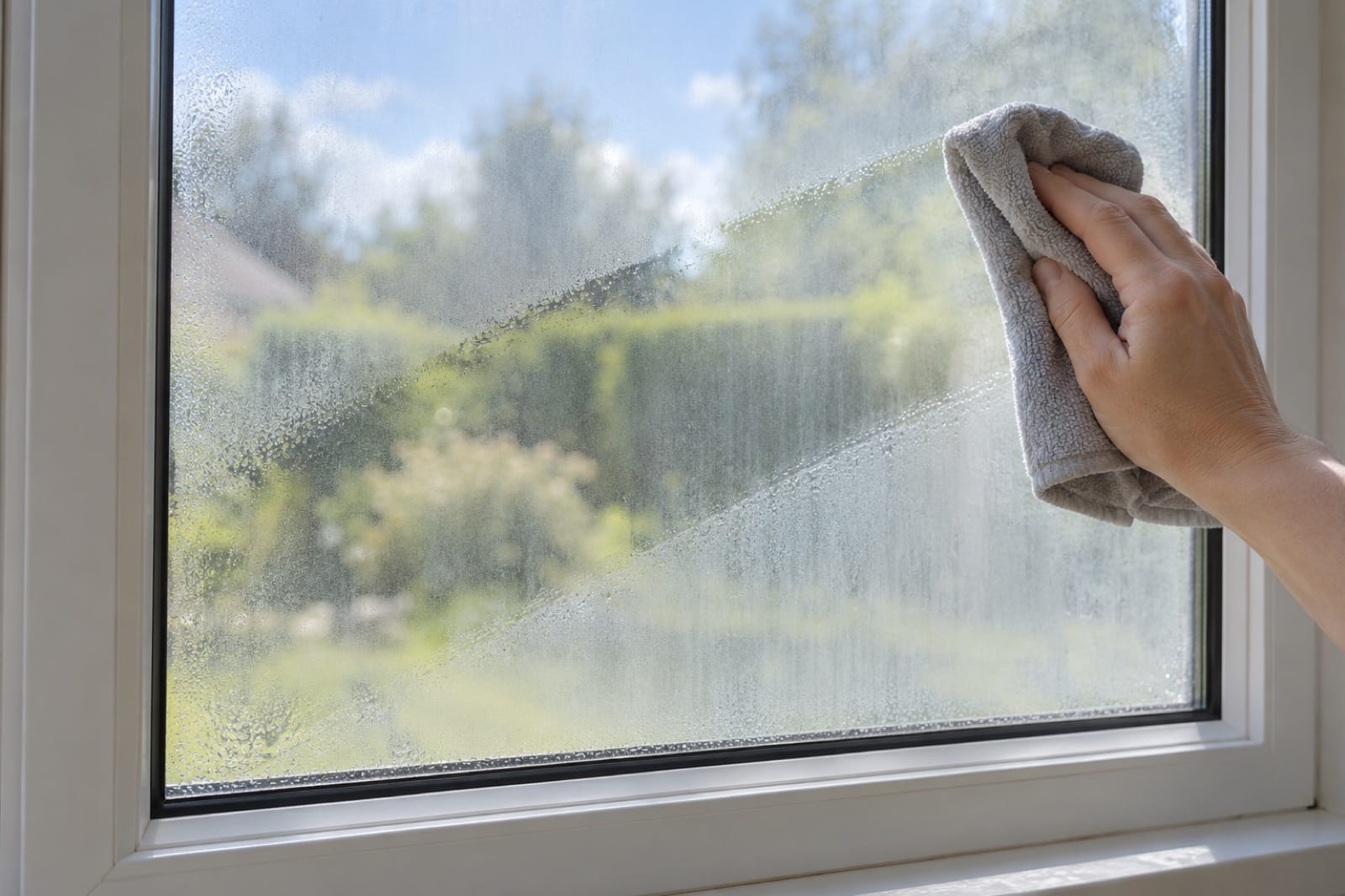
Illustration: if the mist stays after you wipe both sides, it's between the panes and the seal of the glass unit has failed.
If it's on the room side and keeps coming back, the problem is indoor humidity rather than the window. Our guide to finding the cause of damp and mold covers what to check next.
Is condensation between window panes bad?
It's mostly a problem for the view. A failed seal usually shows up gradually: mist that comes and goes as the sun heats the window, then a white haze or streaks between the panes that never clear. The unit has probably lost some of its insulating value too, but one foggy unit won't damage your house, and it doesn't need an emergency repair.
Do check around it, though. Water on the sill, stains on the wall below or soft wood in the frame are separate problems, and they're the ones that need attention sooner. Selling or buying? A foggy unit is worth adding to your home inspection checklist.
How do you find where the heat comes in around a window?
On a hot, sunny afternoon, scan each window from inside the room, about 1–2 m (3–6 ft) back, with the blinds open. It takes about 10 minutes.
- Hot glass on the sunny side is expected. What matters is the comparison: the windows that read hottest are the ones heating the room most, and the first to shade.
- Hot frames. Plain aluminum frames conduct heat well, so on a sunny wall they can read much hotter than the wall around them. Frames with a thermal break, and wood or vinyl frames, stay cooler.
- Hot blinds and curtains. A dark blind in the sun soaks up heat and radiates it into the room. If the inside face of the blind reads almost as hot as the glass, it's only slowing the heat down, not stopping it.
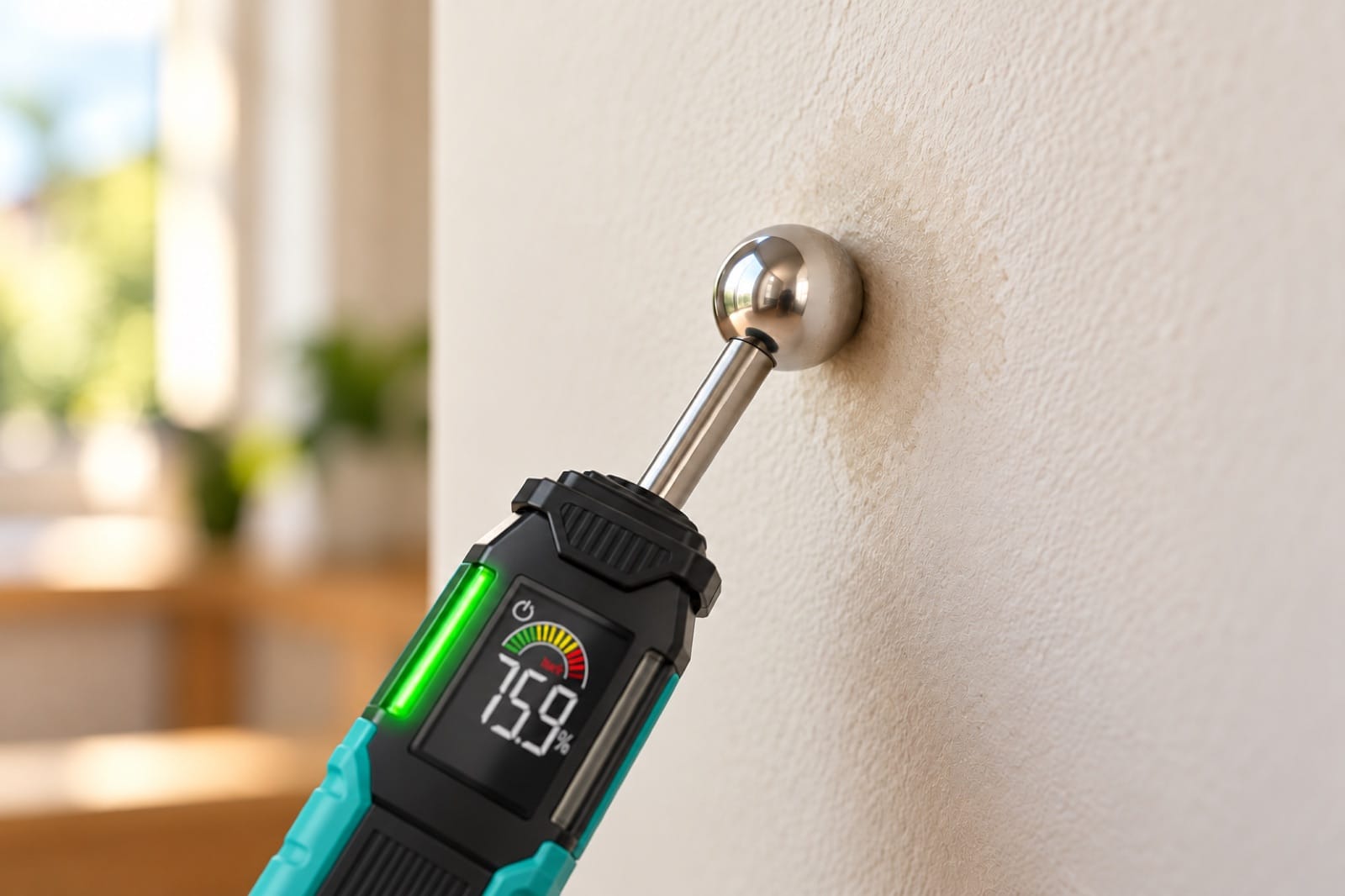
- A warm wall or sill below the window may just be sun-heated. If it's also stained, check it's not wet as well: a moisture meter like Damp tells you which.
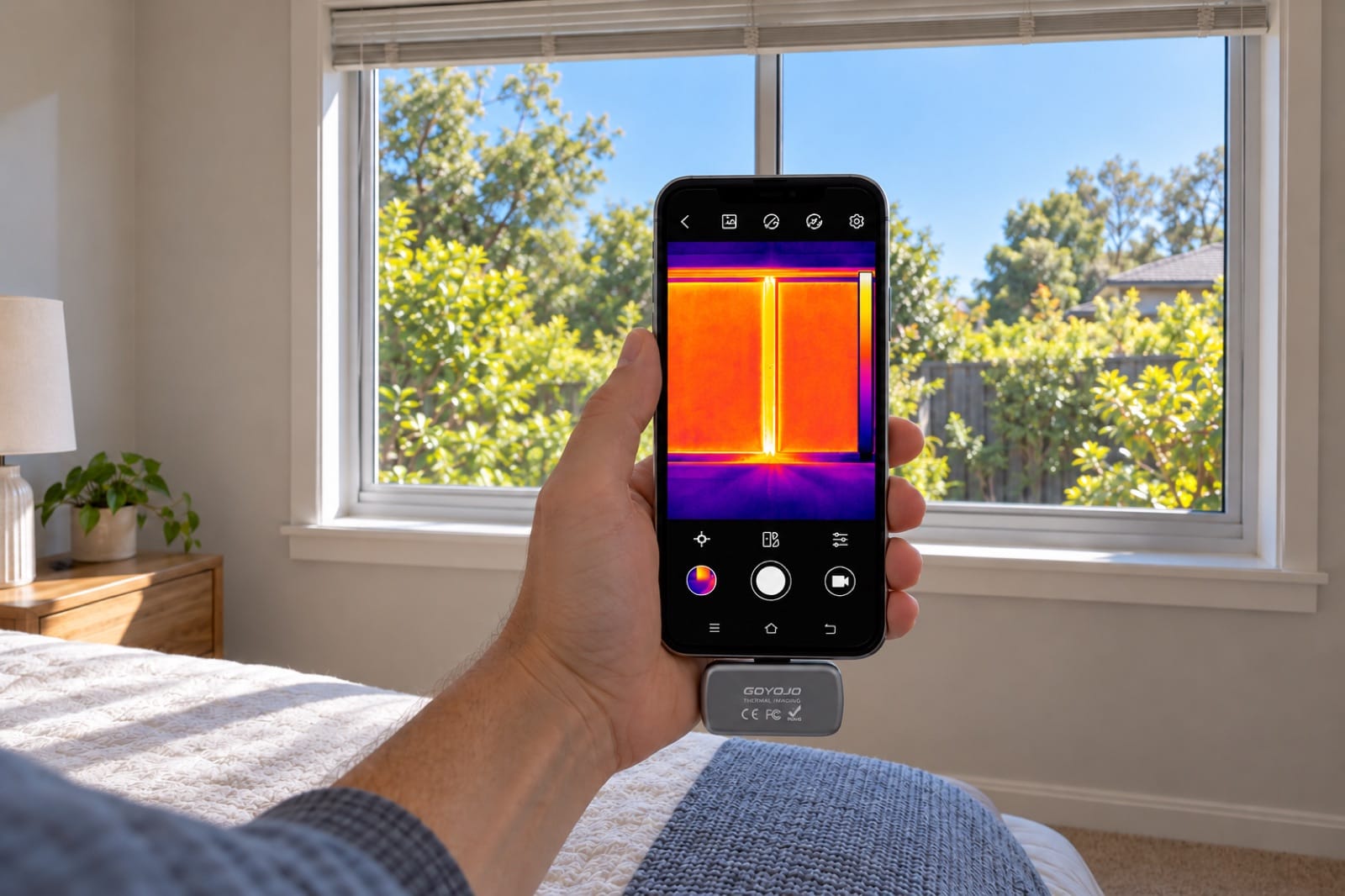
Illustration: on a sunny afternoon, plain aluminum frames can read hotter than the glass and the wall around them.
Glass also reflects heat from the sky, the room and you, so treat readings on glass as rough. Read the frame, the sill and the wall around the window for anything you want to compare. Our guide to reading a thermal image covers reflections in detail.
How do you find drafty windows?
Allow about two minutes per window. Drafts show up on a thermal camera when the air outside is much warmer or cooler than inside. A hot day with the mini-split cooling the house, at least 10 °C (18 °F) cooler inside than out, works well.
Make the leaks stronger first:
- Close and lock every window and exterior door. The lock pulls the sash tight against its seals; an unlocked window can leak even when it's shut.
- Switch on the bathroom and kitchen exhaust fans. They push air out of the house, so outside air is pulled in through every gap.
Then scan each window from about 1 m (3 ft) away:
- Feathered warm streaks from a corner, the bottom of a sash or the interlock where two sliding sashes meet are air leaks: worn brush or rubber seals, or a sash that doesn't close fully.
- A warm line along the trim, where the window frame meets the wall, means air is coming through the gap between the frame and the wall opening.
The same setup works for doors, outlets on exterior walls and the attic hatch; our one-weekend whole-home checklist covers the rest of the house.
A gap around a window is often only a fraction of an inch wide. Spark Pro shows a thin draft line from a step back, so you can check a whole window, top to bottom, without pressing your nose to the frame.
How do you fix condensation between window panes and drafty frames?
Fix things in this order: the cheap steps that help most come first, and foggy double-pane windows can usually wait.
First: seal the gaps (an afternoon)
Sealing works in every season: it keeps hot air out in summer and warm air in during winter.
- Replace worn seals on the sashes and the interlock. Sliding windows usually use brush (pile) seals that slide into a channel; take a piece of the old one to the hardware store to match the size.
- Seal the trim where it meets the wall and the frame, with paintable caulk.
- Gaps between the frame and the wall behind the trim are best filled with low-expansion foam made for windows and doors. Ordinary expanding foam can push the frame out of shape and jam the sash.
Scan again on the next hot day. The streaks should be gone or much smaller.
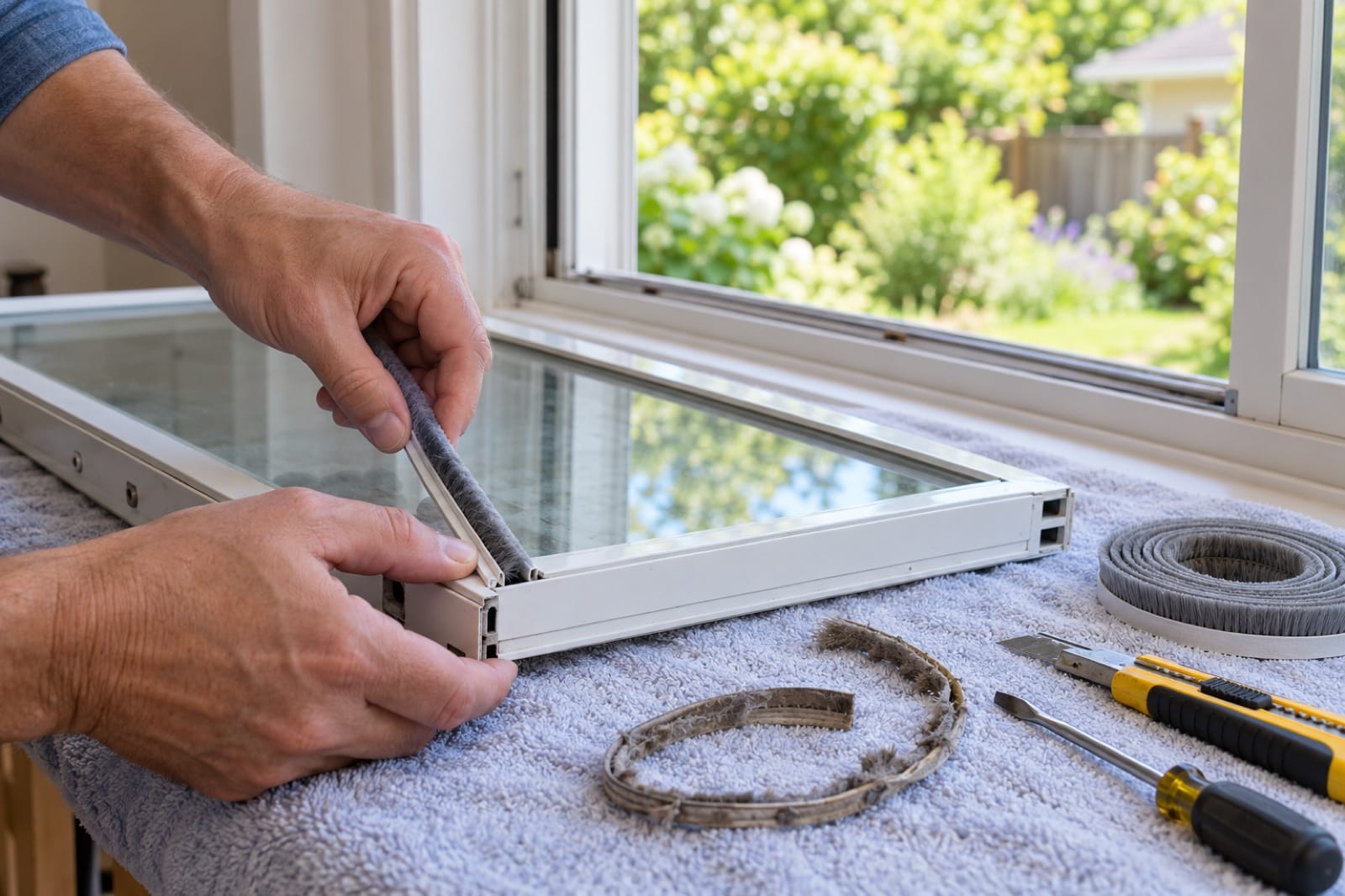
Illustration: worn brush seals slide out of their channel; take a piece of the old one to match the size.
Second: stop the sun before it reaches the glass
Shade on the outside of the window stops most of the heat before it gets in; blinds inside only stop it after it has already passed through the glass.
- Outside: exterior shades or shutters, an awning, a shade sail or a covered pergola over the hottest windows.
- Inside: close blinds and curtains on the sunny side before the sun hits, not after. Light-colored or reflective backings help.
- Window film: on double-pane windows, ask the window maker first. Some films make the glass run hotter and may affect the warranty.
Third: failed glass units (when it suits you)
A misty unit doesn't need an emergency repair, but it won't clear by itself.
- Replace the glass unit, not the window. In many frames a glazier can swap just the sealed unit.
- Check the warranty. Many window makers cover seal failure for a number of years; the paperwork that came with the windows says how long.
- About "defogging" services: some companies drill the unit, dry it and seal the holes. Results vary, and it doesn't restore any insulating gas the unit has lost.
Last: replacing the whole window
Only when the frame itself is the problem: rot you can push a screwdriver into, a sash that won't close or lock, or broken hardware. If the frames are sound, the steps above get you most of the comfort for a fraction of the cost.
What can't a thermal camera tell you about windows?
- It can't see the mist between the panes or whether a seal has failed; your eyes and the wipe test do that.
- Readings on glass are rough because of reflections.
- It can't tell you if a stained wall under a window is wet. Use a moisture meter for that.
Frequently asked questions
Will a hair dryer get rid of condensation between glass panes?
Only for a short while, if at all. Warming the glass can make some of the moisture fade, because warm air holds more water, but the moisture is still inside the unit and the seal is still broken. The fog comes back as the glass cools. Too much heat in one spot can also stress the glass, so it isn't worth trying as a repair.
Can I reseal my double-pane windows?
Not in a way that really fixes the problem. Caulk on the outside of the unit can't dry out the air already trapped between the panes, and the seal that failed sits inside the frame around the glass. Keep caulk for the gaps between the frame and the wall. To clear the fog for good, replace the sealed glass unit.
How do you get rid of moisture between double-pane windows?
The lasting fix is a new sealed unit. Defogging services can improve the view by drilling small holes, drying the space and sealing it again, while the "straw" trick you may see online follows the same idea at home. Neither one makes the unit airtight the way it was when it was new, so the fog may return, and any insulating gas it has lost stays lost.
How much does it cost to fix condensation between window panes?
It depends on the size and type of glass, how easy the window is to reach, and whether the frame lets a glazier swap the unit alone. Replacing only the sealed unit usually costs much less than a new window. Check your warranty first, since seal failure may be covered, then ask for a written quote from a local glazier and compare both options.
Do foggy windows mean I need all new windows?
No. A foggy pane tells you that one sealed unit has failed, not that every window in the house has. If the frame is sound and the sash still closes and locks, you can usually replace just that unit. It's worth checking the other windows of the same age, though, since seals that were made together can wear out around the same time.
The tools in this guide
Prices are on each product page, in your local currency.
- Spark Pro — shows which windows let in the most heat and finds thin draft lines around frames from a step back.
- Damp — pinless moisture meter to check whether a sill or the wall under a window is wet.
The Whole Home Kit puts Spark Pro, Damp and the Reach 360 inspection camera together for 10% less than buying them separately.
Find the coldest windows and the drafts before winter really arrives. Order Spark Pro and check your windows this weekend, or get the Whole Home Kit for the whole house.