Can a thermal camera find termites? What it shows, and what it can't
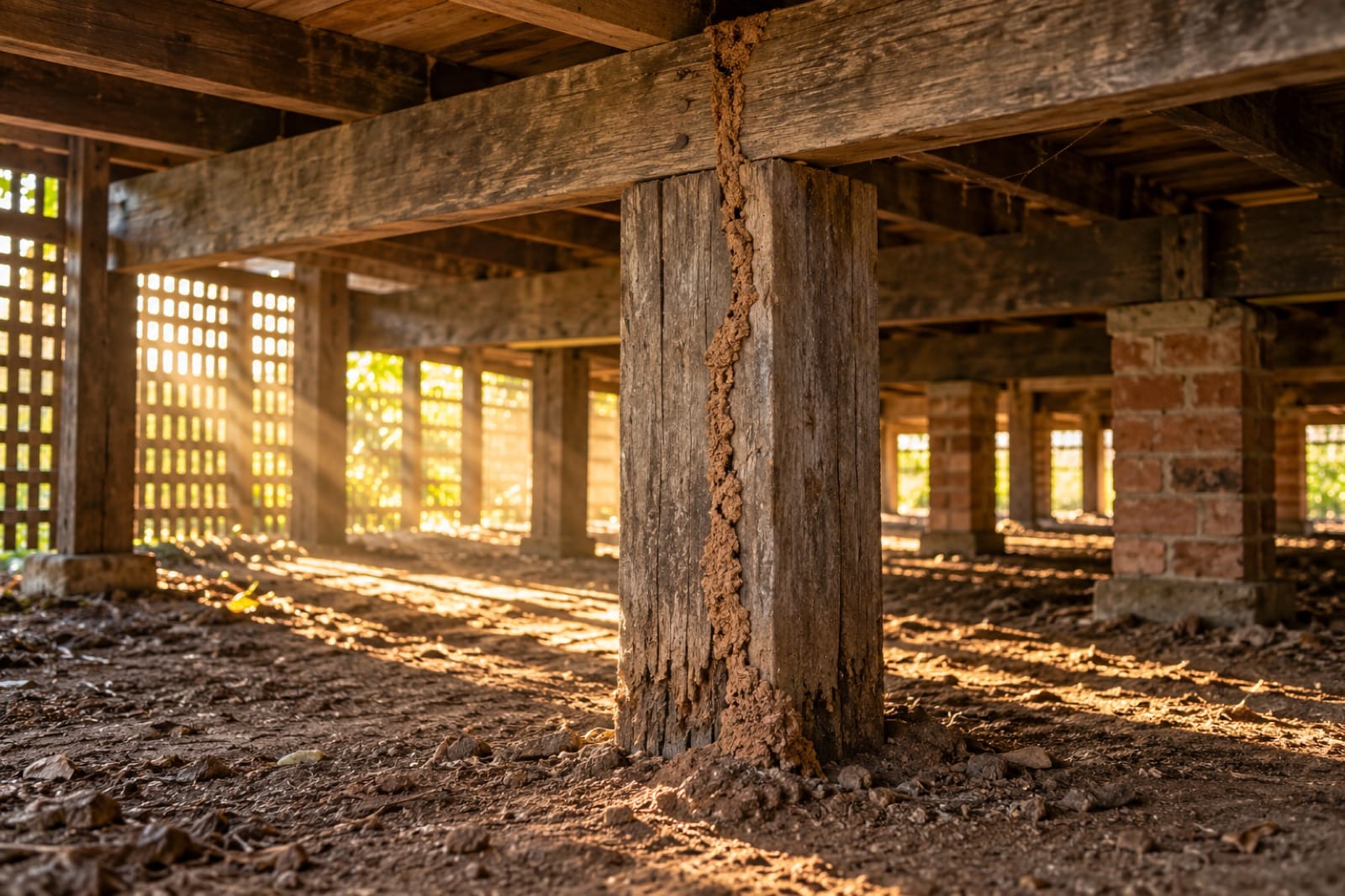
Termites cause more damage to Australian homes than fires, floods and storms combined, according to the Victorian Building Authority. Most home insurance policies don't cover it either. And because subterranean termites eat timber from the inside and leave the painted surface intact, the first sign is often a skirting board that crumbles when the vacuum hits it.
A thermal camera won't replace a licensed timber pest inspection. It can help you look between inspections, and know where to point the inspector when you call one. Here's what it can and can't do.
Why termites can show up on a thermal camera
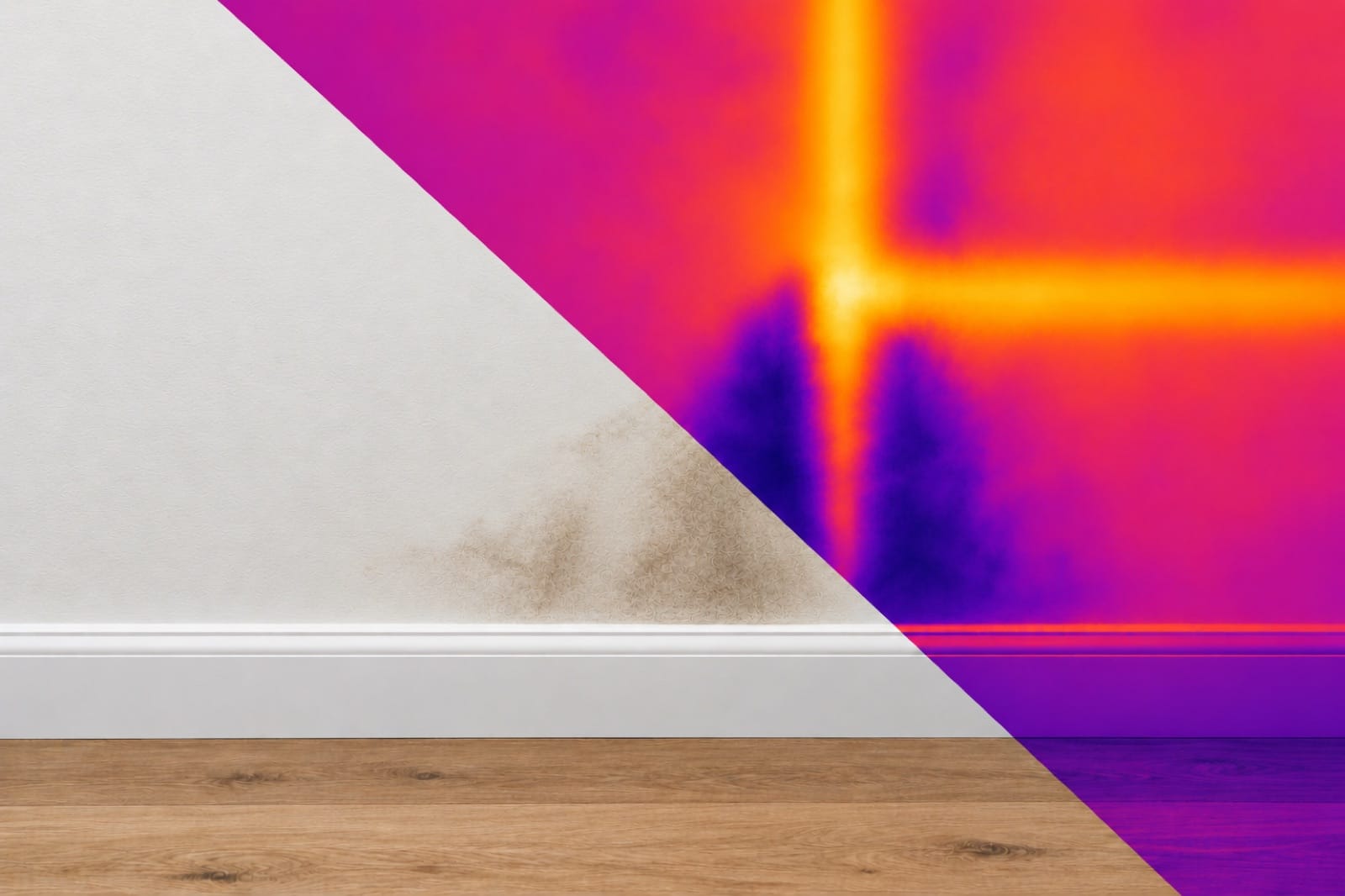
A thermal camera reads surface temperature, so it can't see the insects. What it can pick up is what a working termite colony does to a wall:
- Moisture. Subterranean termites need damp conditions. They carry soil and moisture into the timber and seal their galleries with mud, and that damp patch usually reads a little cooler than the dry wall around it.
- Warmth. A large, active colony produces heat. Behind thin plasterboard it can show as a faint warm patch that doesn't match anything else in the room.
- Shape. Termite workings follow the timber: up a stud, along a door frame, under a window sill. A patch with a strange, branching shape that tracks the framing deserves a closer look.
None of these proves termites. A leaking pipe, a gap in the insulation or a damp corner can look the same. What the camera does is turn "check the whole house" into "check these three spots".
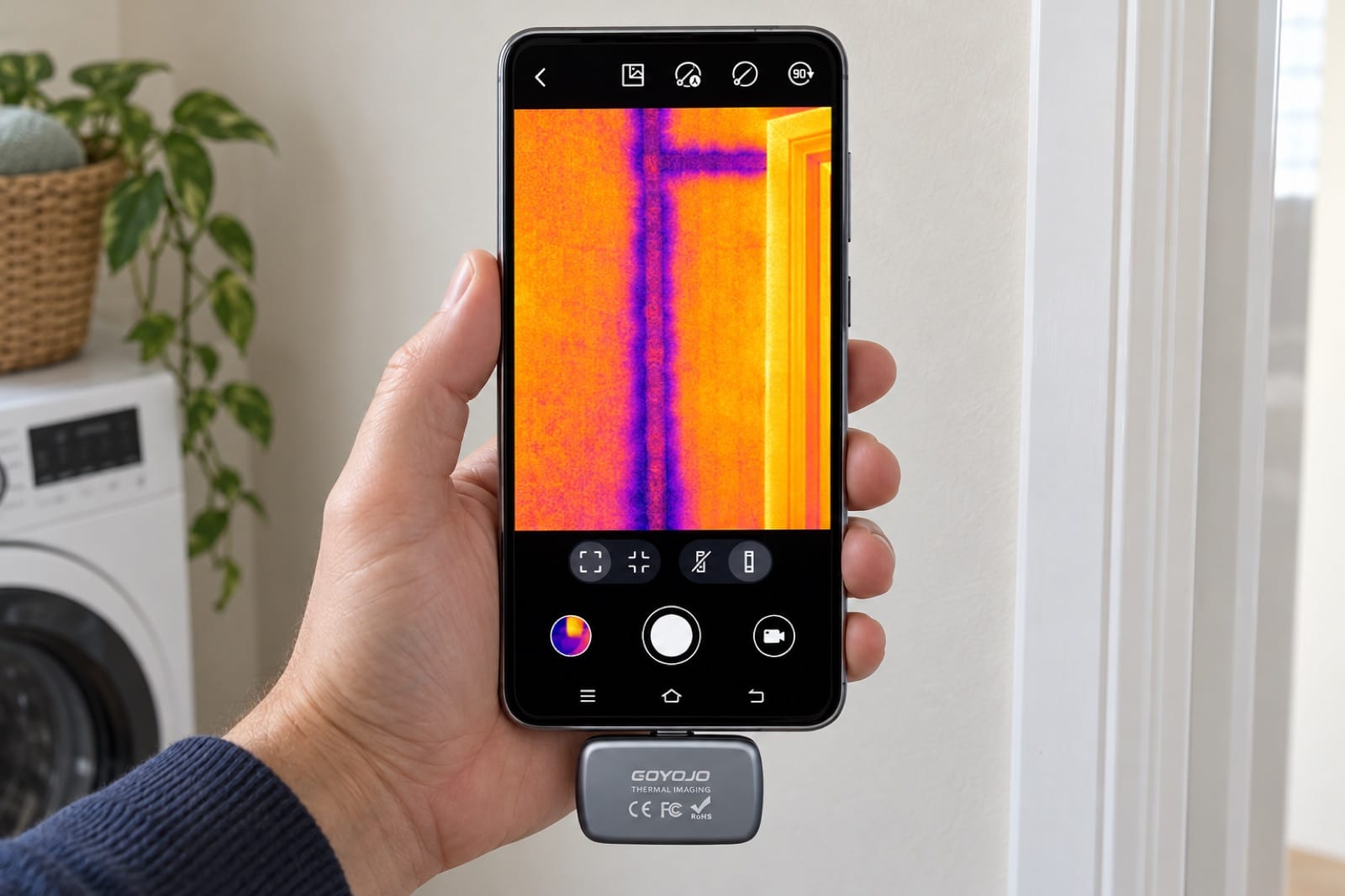
Illustration: this one is normal. Straight, even bands along the studs and noggings are just the framing showing through. What stands out is a patch that's irregular and doesn't repeat at the next stud.
How to scan for termite risk
You'll get the clearest picture when the inside and outside temperatures are different — early morning, or with the heater or air-con running for an hour.
- Start where termites start. Ground-floor walls, door frames, skirting boards, window sills, and anything that touches the ground or backs onto a garden bed.
- Scan wet areas twice. Bathrooms, laundries and kitchens give termites the moisture they need. Look for cool patches that don't line up with a pipe you know about.
- Follow the timber. Stand back two metres so you see a whole wall, then move closer to anything that follows a stud or frame.
- Take a photo of anything odd, with a normal photo of the same spot. The app saves both.
A higher-resolution camera matters here, because the patches are small and the temperature differences are slight. With Spark Pro you can scan a whole wall from a couple of metres back; with Spark, work closer, about an arm's length away.
Check the suspicious spots
Is it wet?
Run a pinless moisture meter across the patch you found and compare it with a dry part of the same wall. Timber framing and plasterboard that read much wetter than the rest of the wall, with no plumbing nearby, are worth reporting.
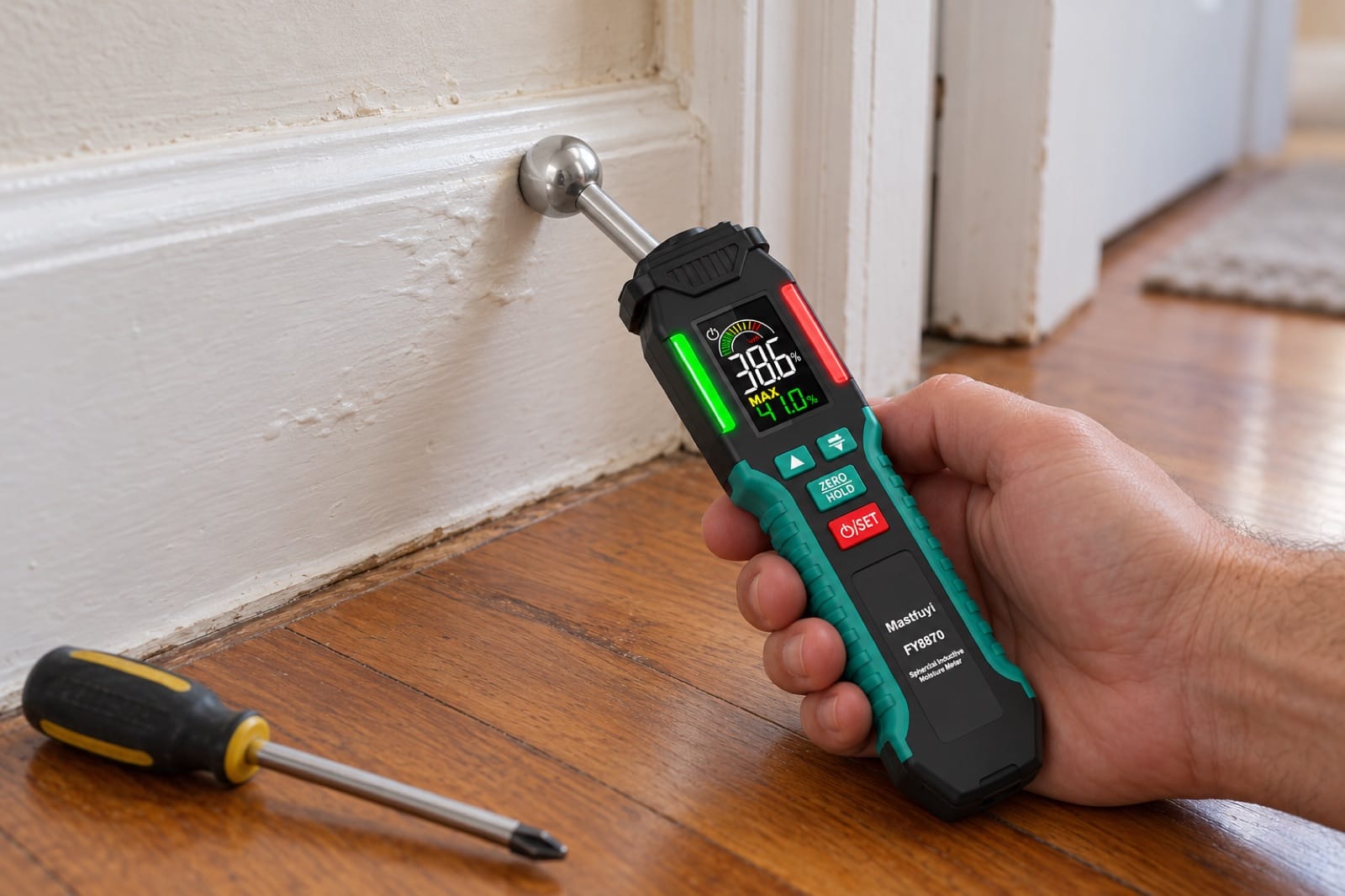
Illustration: an elevated reading on dry-looking timber, far from any plumbing, is worth reporting.
Tap, then look — but don't break in
Lightly tap the skirting or frame with the handle of a screwdriver. Timber eaten out by termites sounds hollow or papery.
If it does, don't break it open or spray it. Disturbed termites retreat and seal off the area, which makes it harder for a pest manager to find them and treat the colony. Leave it as it is and call a licensed timber pest inspector.
Look where you can't reach
Under the house, in the roof space and behind built-in cupboards are where termites work unseen. An inspection camera lets you look along the subfloor, behind a vanity or up a gap without crawling in. Look for:
- Mud tubes (leads) running up brick piers, stumps, slab edges or pipes — usually pencil-width, brown and earthy.
- Damp, darkened or crumbling timber, especially near plumbing.
- Mud packed into joints and gaps in the timber.
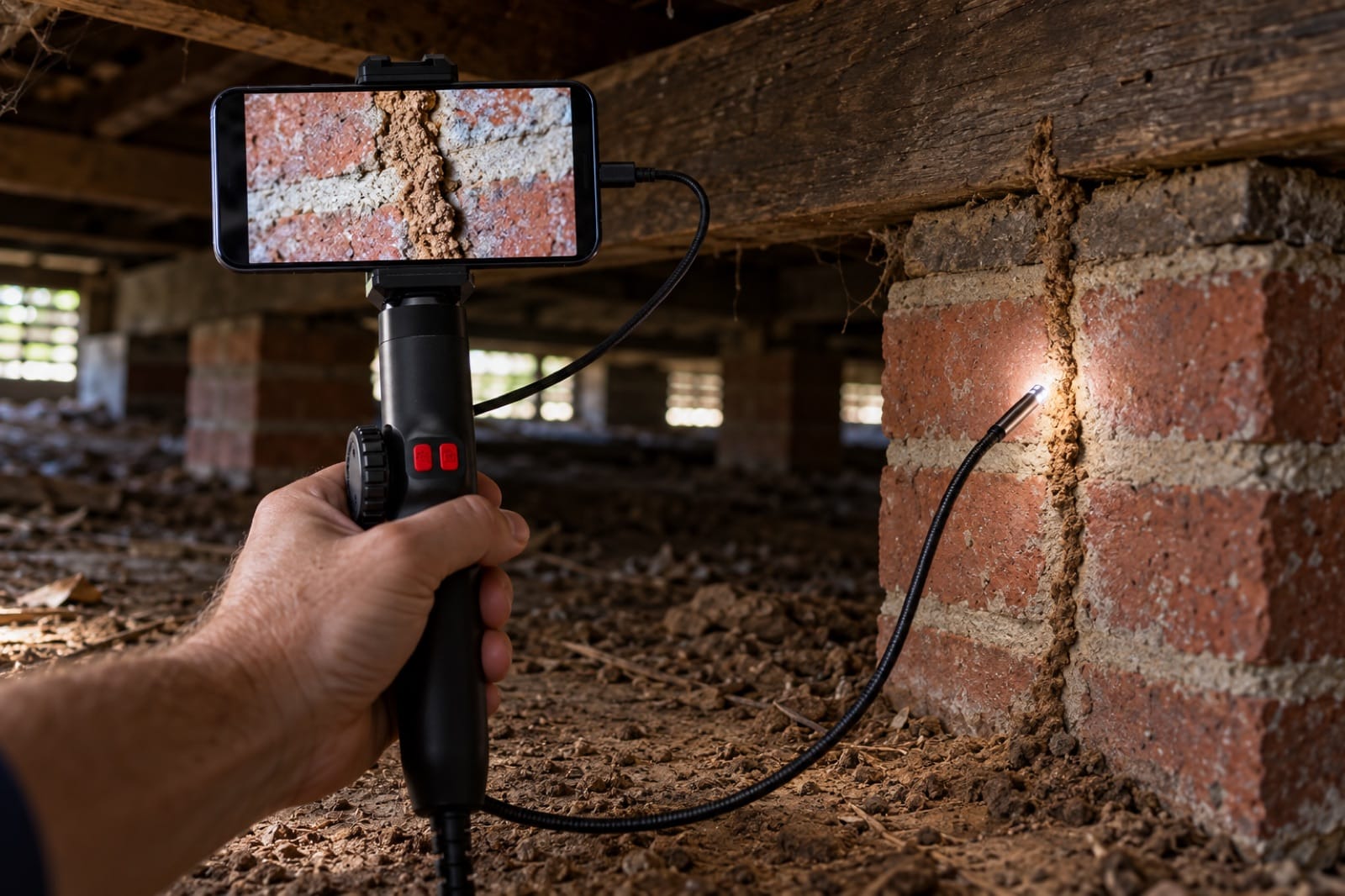
Illustration: a mud lead on a subfloor pier, seen without crawling all the way in.
What a licensed inspection gives you
Australian Standard AS 3660 recommends a termite inspection at least once every 12 months, and more often in high-risk areas. A licensed inspector checks the subfloor, the roof space and the outside of the house, often with their own thermal camera, moisture meter and sounding tools, and gives you a written report. If you're buying, a pre-purchase timber pest inspection is done to AS 4349.3.
Your own scan doesn't replace that report. It does three useful things between inspections:
- You notice a problem in month four, not month twelve.
- You can tell the inspector exactly where to look, with photos.
- You can check the spots that worried you after a treatment.
Things that make termites more likely
While you're scanning, fix the conditions termites like:
- Leaking taps, pipes and hot water system overflows near the house
- Garden beds, mulch or soil piled up against the walls or over the slab edge
- Timber, firewood or old formwork stored under or against the house
- Air vents in the subfloor blocked by plants or rubbish
- Air-conditioner drains dripping onto the ground next to the wall
The tools in this guide
- Spark Pro — the sharper thermal camera for small, low-contrast patches. A$349.
- Damp — pinless moisture meter to check whether a cool patch is wet. A$99.
- Reach 360 — inspection camera with a tip that bends to look along subfloors and up cavities. A$179.
All three are in the Whole Home Kit for A$48 less than buying them separately.